Six years into his leadership, Hyundai chief shifts focus to robotics, autonomous driving and AI-powered factories
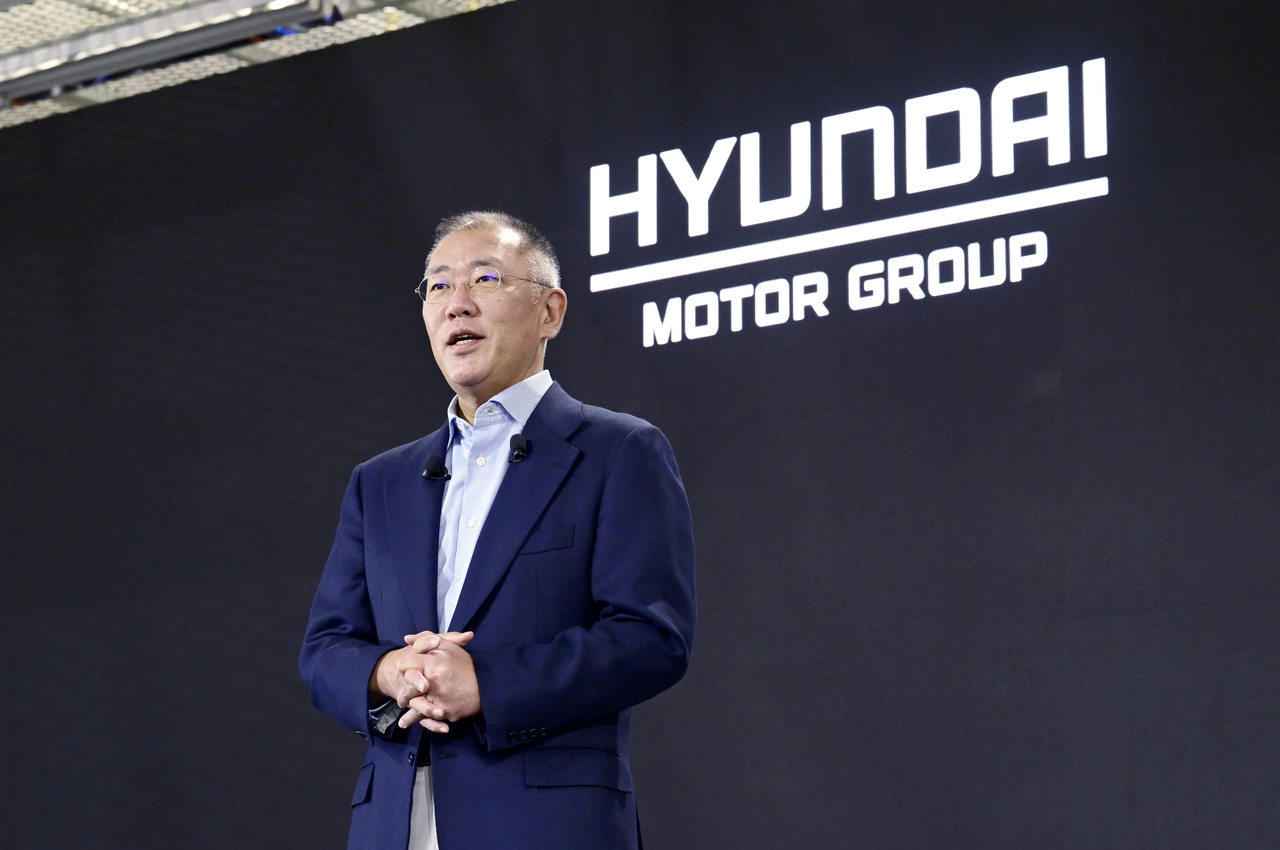
Six years after taking the helm, Hyundai Motor Group Executive Chair Chung Euisun is steering the South Korean automotive giant beyond vehicles toward physical AI.
Since taking office on Oct. 14, 2020, Chung has overseen a sweeping transformation, expanding Hyundai Motor and Kia's electric and hybrid lineups, strengthening luxury brand Genesis and boosting profitability through a shift toward higher-margin vehicles.
His next task centers on turning Hyundai Motor Group into a physical AI powerhouse, weaving autonomous driving, humanoid robots and AI-driven factories into its core manufacturing and mobility operations.
Chung is betting that Hyundai’s global manufacturing footprint, years of engineering expertise and vast troves of production data will give it a competitive edge in emerging tech industries, well beyond traditional automaking
“Hyundai Motor Group is evolving beyond the traditional boundaries of automotive manufacturing by expanding into autonomous driving, robotics and AI-defined factories, accelerating our transformation into a physical AI solutions company,” Hyundai Motor Group Executive Chair Chung Euisun said at the San Francisco AI Summit on July 24, as the automaker unveiled its AI strategy.
Rise to global top three
Under Chung, Hyundai Motor and Kia rose from fifth to third in global vehicle sales in 2022 and have held that position for four consecutive years.
The two carmakers sold a combined 7.27 million vehicles worldwide in 2025, according to the auto group, and their annual revenue exceeded 300 trillion won ($224 billion) for the first time. Their combined operating profit reached 20.55 trillion won last year, surpassing Volkswagen Group's for the first time to rank second globally behind Toyota Motor Corporation.
The momentum continued into the second quarter of 2026, when the companies posted combined revenue of 82.25 trillion won, their highest quarterly total on record.
Much of that growth has been driven by a shift toward electrified vehicles and higher-margin models, particularly sport utility vehicles.
Under Chung, the group introduced its dedicated electric vehicle platform E-GMP, laying the foundation for models such as the Hyundai Ioniq 5, Ioniq 6 and Kia EV6 and EV9.
At the same time, the group has also taken a more flexible approach to electrification, ramping up hybrid production in response to slower-than-expected EV demand in some markets. Combined sales of environmentally friendly vehicles reached approximately 1.76 million units last year.
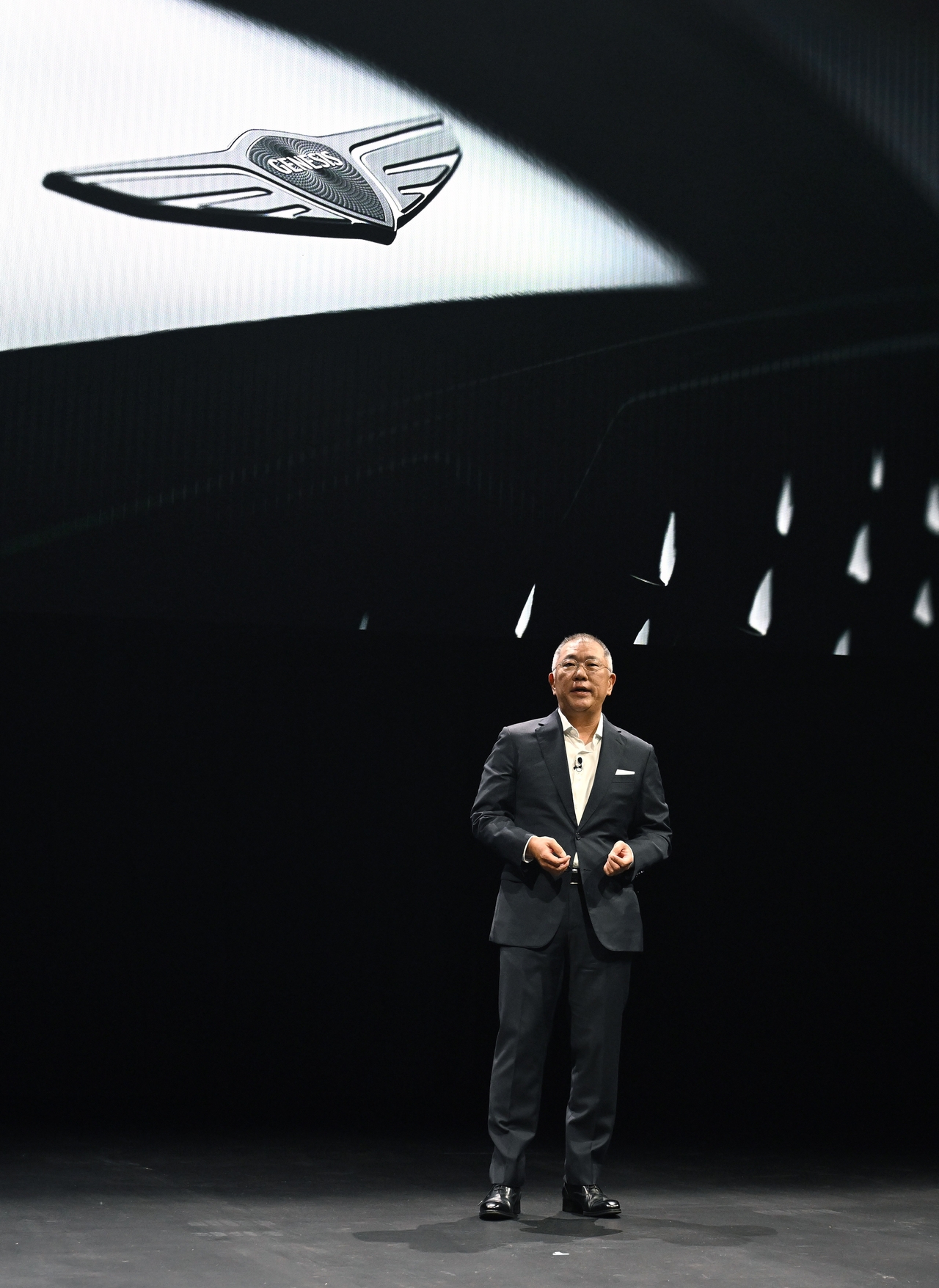
Another pillar of Chung's strategy has been Genesis, the luxury brand he helped launch in 2015. Genesis surpassed 1.5 million cumulative global sales in January, after reaching the 1 million milestone in 2023.
Genesis’ next goal is to expand its lineup and markets. After unveiling the GV90 large electric SUV in August, Genesis is targeting annual sales of 350,000 vehicles across more than 40 markets by 2030, with plans to expand into India and other European and Asian markets.
Genesis is also eyeing high-performance cars and motorsports to strengthen its premium credentials. The brand made its World Endurance Championship debut this year, including an appearance at the 24 Hours of Le Mans attended by Chung.
From automaker to physical AI powerhouse
Having strengthened Hyundai's position in the global auto industry, Chung now seeks to turn the group into a tech-driven company built around physical AI.
Unlike AI systems confined to digital environments, physical AI enables machines such as vehicles and robots to perceive, learn and interact with the physical world.
Hyundai’s strategy starts with intelligent devices such as autonomous vehicles and robots. It then expands to AI-defined factories, connecting production, logistics and quality control.
The push builds on major investments under Chung, including the 2020 launch of the autonomous-driving joint venture Motional, the 2021 acquisition of robotics firm Boston Dynamics and the 2022 takeover of autonomous driving software developer 42dot.
The group has also strengthened partnerships with global technology companies, including Nvidia and Waymo, while Boston Dynamics is collaborating with Google DeepMind to accelerate the development of intelligent humanoid robots.
“By combining Hyundai Motor Group’s strengths in manufacturing, robotics and data with the capabilities of global technology leaders, we can help create a new innovation ecosystem for the physical AI era,” said Chung at the July summit.
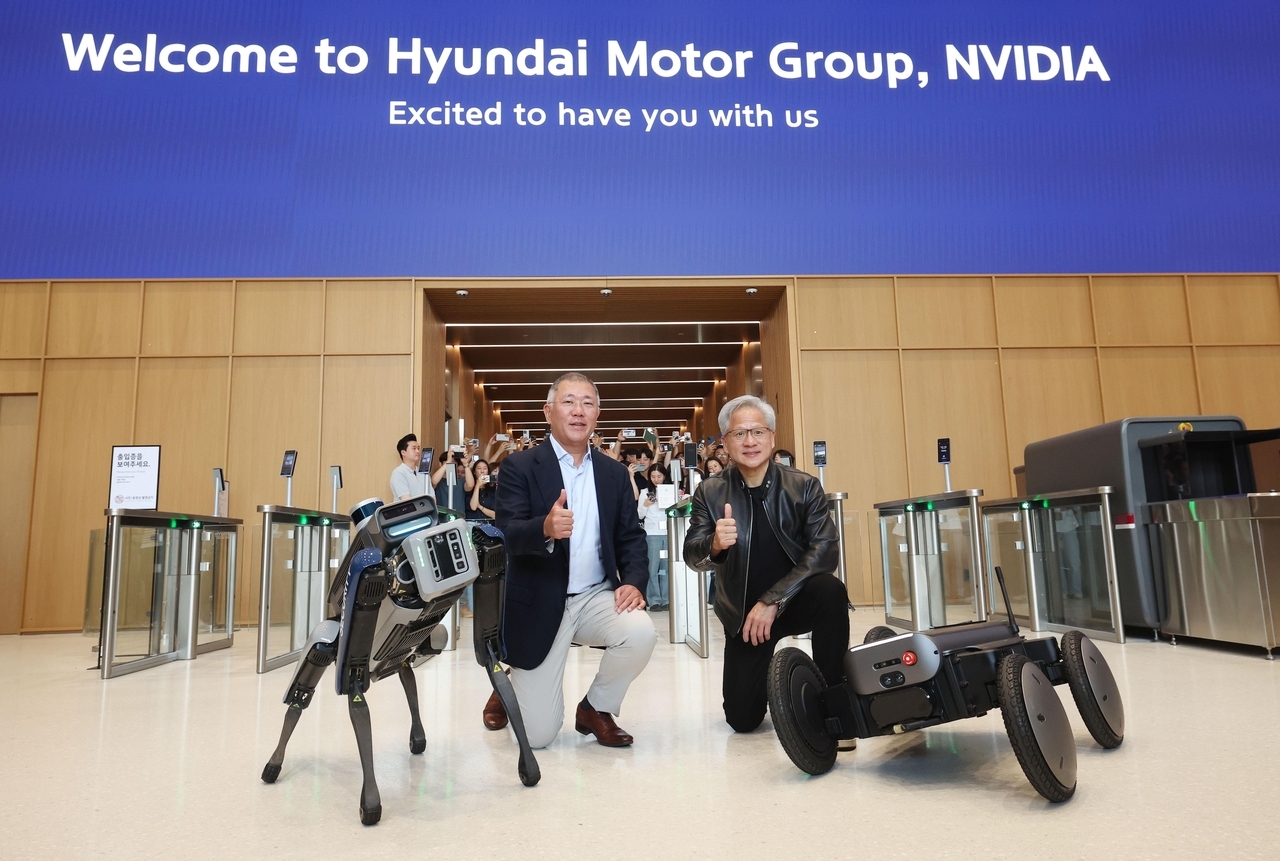
At the center of the robotics strategy is Atlas, Boston Dynamics’ humanoid robot, which the group aims to bring to its factory steps.
The group’s Robotics Metaplant Application Center in the US is designed to train robots using real-world manufacturing data, with Atlas expected to be deployed at Hyundai Motor Group Metaplant America in Georgia in 2028, initially handling tasks such as parts sequencing before taking on more complex assembly work.
To support its technology transition, Hyundai Motor Group plans to invest 125.2 trillion won in South Korea over 2026 to 2030 in AI, software-defined vehicles, robotics, hydrogen and other future technologies.
The group is also pursuing a 9 trillion won AI, robotics and energy hub in Saemangeum, a reclaimed coastal area in southwestern Korea, including a data center expected to handle about 50,000 graphics processing units.
The group also plans to invest 42 trillion won over the next decade in the southeastern Yeongnam region to develop advanced industries, including AI-defined vehicles and autonomous manufacturing.
Overseas, Hyundai Motor Group is investing $26 billion in the US, covering automotive production, steelmaking and robotics.
sahn@heraldcorp.com